Today’s Daily Buddha


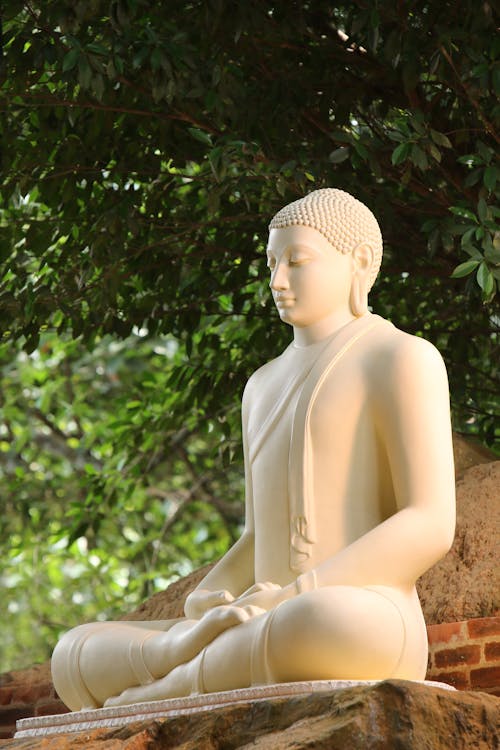
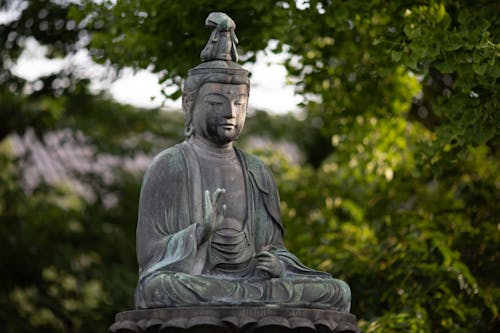
Buddha Statue Near Trees

“Each morning we are born again. What we do today matters is what matters the most” – Buddha

The sources which present a full and complete picture of the life of Siddhārtha Gautama are a variety of different, and sometimes conflicting, traditional biographies. These include the BuddhacaritaLalitavistara SūtraMahāvastu, and the Nidānakathā.  Of these, the Buddhacarita is the earliest full biography, an epic poem written by the poet Aśvaghoṣa in the first century CE. The Lalitavistara Sūtra is the next oldest biography, a Mahāyāna/Sarvāstivāda biography dating to the 3rd century CE. The Mahāvastu from the Mahāsāṃghika Lokottaravāda tradition is another major biography, composed incrementally until perhaps the 4th century CE. The Dharmaguptaka biography of the Buddha is the most exhaustive, and is entitled the Abhiniṣkramaṇa Sūtra, and various Chinese translations of this date between the 3rd and 6th century CE. The Nidānakathā is from the Theravada tradition in Sri Lanka and was composed in the 5th century by Buddhaghosa.
B00EXVDF54

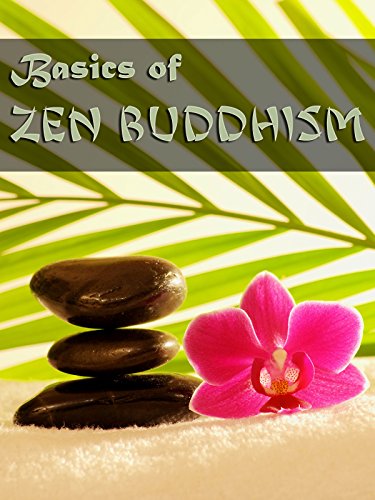
WATCH NOW – Basics of Zen Buddhism 

1938477073

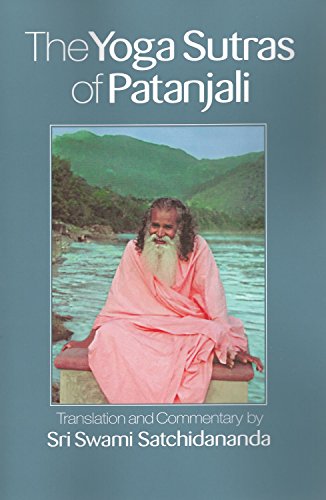
READ FOR FREE  – The Yoga Sutras of Patanjali

Today’s Daily Buddha

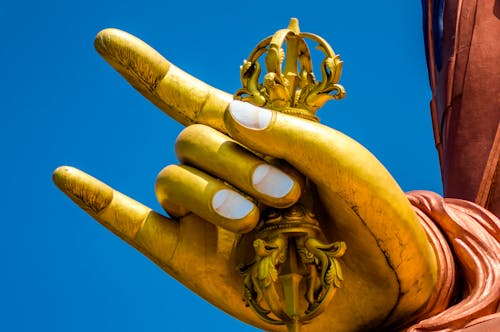
Buddha Hand Statue

This is a saying from the Pali canon, upadhi dukkhassa mūlanti, which means “Attachment is the root of suffering.” So this is a genuine canonical quote.

You’ll find it in this sutta, but translated by Thanissaro as “Acquisition is the root of stress.” His translations are rather idiosyncratic.

In this translation of the same sutta it’s “acquisition is the root of suffering.”

Bhikkhu Bodhi’s translation (not available online, but in The Middle Length Discourses of the Buddha, page 868) has “attachment is the root of suffering,” although he sometimes has “acquisition” in place of “attachment,” in various repetitions of the phrase.

B00EXVDF54

Basics of Zen Buddhism 

1938477073

The Yoga Sutras of Patanjali

Today’s Daily Buddha

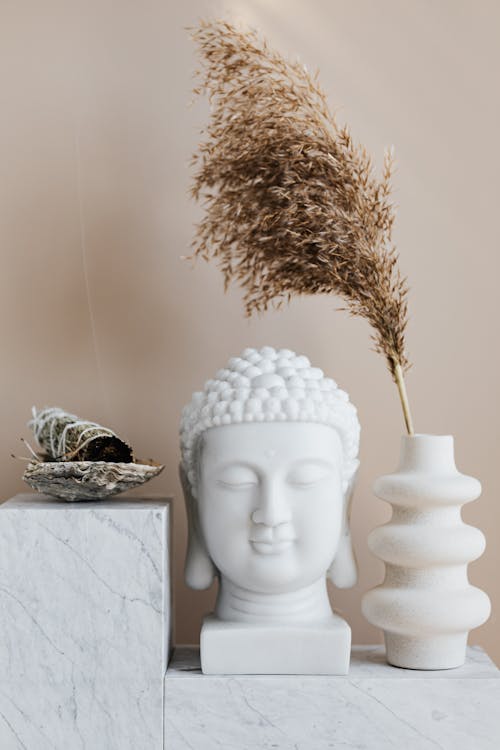
Vase with dried herb arranged with Buddha bust and sage smudge stick in bowl

“We are what we think. All that we are arises…”

According to the Buddhist tradition, Gautama was born in Lumbini, now in modern-day Nepal, and raised in Kapilvastu, which may have been either in what is present-day Tilaurakot, Nepal or Piprahwa, India.  According to Buddhist tradition, he obtained his enlightenment in Bodh Gaya, gave his first sermon in Sarnath, and died in Kushinagar.

One of Gautama’s usual names was “Sakamuni” or “Sakyamunī” (“Sage of the Shakyas”). This and the evidence of the early texts suggests that he was born into the Shakya clan, a community that was on the periphery, both geographically and culturally, of the eastern Indian subcontinent in the 5th century BCE.  The community was either a small republic, or an oligarchy. His father was an elected chieftain, or oligarch.   Bronkhorst calls this eastern culture Greater Magadha and notes that “Buddhism and Jainism arose in a culture which was recognized as being non-Vedic”.

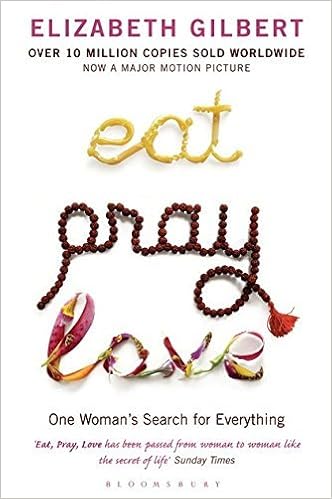
Eat Pray Love….by Elizabeth Gilbert

1623158281

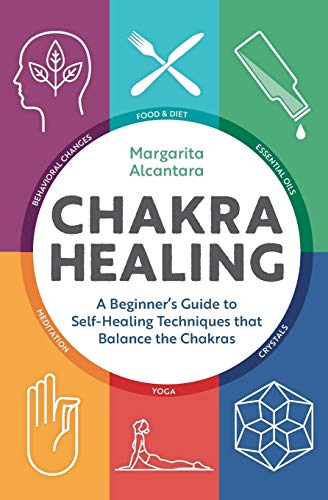
Chakra Healing 

B07T2K6V8K

Boho Yoga Pants

B00XQNBGK6

Attitudes of Gratitude Journal 

Total Meditation

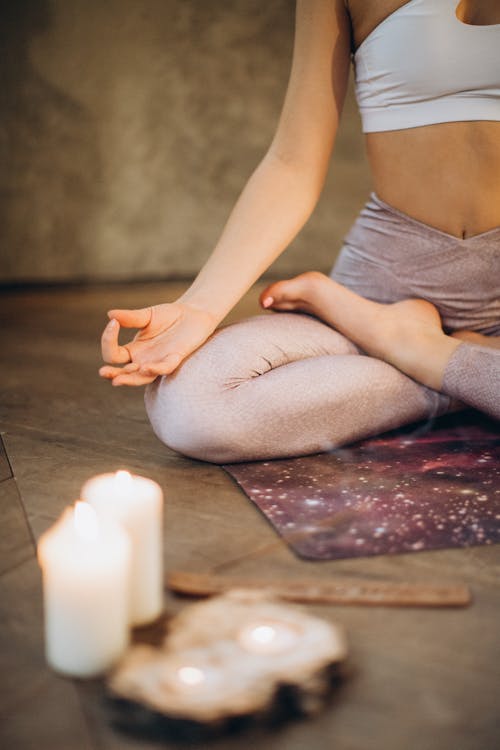
Meditating With Candles and Incense

Soon to be released: Total Meditation: Practices in Living the Awakened Life Hardcover – September 22, 2020 by my favorite author Dr. Deepak Chopra

The definitive book of meditation that will help you achieve new dimensions of stress-free living.

READ FOR FREE

For the past thirty years, Deepak Chopra has been at the forefront of the meditation revolution in the West. Total Meditation offers a complete exploration and reinterpretation of the physical, mental, emotional, relational, and spiritual benefits that this practice can bring. Deepak guides readers on how to wake up to new levels of awareness that will ultimately cultivate a clear vision, heal suffering in your mind and body, and help recover who you really are. Readers will undergo a transformative process, which will result in an awakening of the body, mind, and spirit that will allow you to live in a state of open, free, creative, and blissful awareness twenty-four hours a day.
 
With this book, Deepak elevates the practice of meditation to a life-changing quest for higher consciousness and a more fulfilling existence. He also incorporates new research on meditation and its benefits, provides practical awareness exercises, and concludes with a 52-week program of meditations to help revolutionize every aspect of your life.

PRE-ORDER HERE

Yoga – My Fitness Lifestyle

Not only does yoga strengthen your muscles but it also increases your flexibility. Another perk: Stretching and breathing deeply during yoga helps to reduce stress hormones that contribute to belly fat,

since yoga reduces stress levels, it also has the potential to improve your overall eating habits (less stress eating!), encouraging weight loss.

Indeed, a November 2016 Journal of Clinical & Diagnostic Research study shows that men lost fat when they committed to a 14-week yoga program. The people in the study practiced yoga five days a week for 90 minutes — but don’t worry, every little bit counts.

via Yoga — My Fitness Lifestyle


146547935X

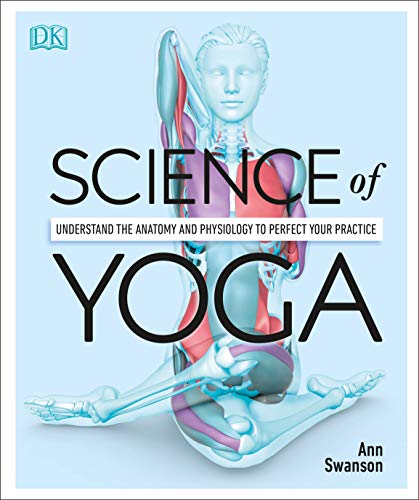
Science of Yoga


B07T2K6V8K

Boho Yoga Pants

What Is Yoga And What Is The Real Meaning Of yoga? — Our Sacred Space

The term “Yoga” is derived from the Sanskrit word “Yuj”, meaning, “to unite”, or “to join”. It brings a perfect harmony between the mind as well as body. We can also say that it is the union of the individual consciousness with the universal consciousness. The ultimate aim is to attain self-realization, or “moksha”. Then, a person will be free from all his fears and sufferings and he will attain his ultimate freedom. A person who does yoga is a “Yogi”.

Lord Shiva is the first yogi or “Adiyogi”. According to history, Lord Shiva poured his knowledge to the seven sages, who in turn took it to different parts of the world. Agastya, one of the seven sages brought it to India, from where it took its full expression. Further, Maharishi Pathanjali organized yoga in a certain format. This is called as Yoga Sutras. “Sutra” means thread. Yoga sutras contain 196 sutras which explain all about the spiritual journey of yoga. According to the Sutras of Pathanjali “Yoga is the calming down of the fluctuations/patterns of consciousness”.

Types of Yoga

Here are some of the common types of yoga:

  1. Kundalini: “Kundalini” is the “life force energy”, that is, the energy coiled at the base of the spine. This type is all about unlocking the energy present at the base of the spine to relieve stress and negativity. It includes a series of breathing and warm-up exercises along with some challenging poses.
  2. Vinyasa: This is “Flow Yoga”. Here, the poses are in co-ordination with the breath, that is, in a continuous flow.

via What Is Yoga And What Is The Real Meaning Of yoga? — Our Sacred Space

146547935X

Science of Yoga


1585426504

Energy Medicine