

“Yoga is a light, which once lit will never dim. The better your practice, the brighter your flame.” — B.K.S. Iyengar
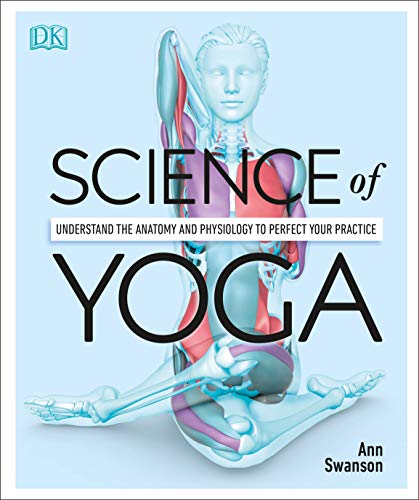
Science of Yoga

Energy Medicine

“Yoga is a light, which once lit will never dim. The better your practice, the brighter your flame.” — B.K.S. Iyengar

“If you change the way you look at things, the things you look at change.” by Wayne Dyer


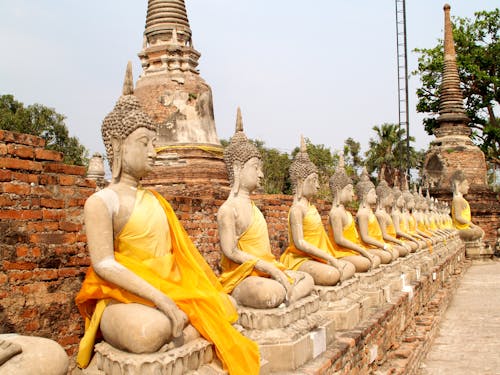
“There’s no use looking back at yesterday. Every morning when the sun rises, I am a changed person. Don’t let yesterday steal today’s joy.. Every time the sun rises, it’s a new opportunity to make your life the best of your life. Enjoy every moment.” Namaste enjoy your day” Buddha
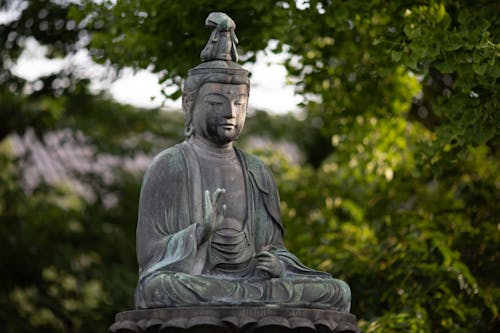
The sources which present a full and complete picture of the life of Siddhārtha Gautama are a variety of different, and sometimes conflicting, traditional biographies. These include the Buddhacarita, Lalitavistara Sūtra, Mahāvastu, and the Nidānakathā. Of these, the Buddhacarita is the earliest full biography, an epic poem written by the poet Aśvaghoṣa in the first century CE. The Lalitavistara Sūtra is the next oldest biography, a Mahāyāna/Sarvāstivāda biography dating to the 3rd century CE. The Mahāvastu from the Mahāsāṃghika Lokottaravāda tradition is another major biography, composed incrementally until perhaps the 4th century CE. The Dharmaguptaka biography of the Buddha is the most exhaustive, and is entitled the Abhiniṣkramaṇa Sūtra, and various Chinese translations of this date between the 3rd and 6th century CE. The Nidānakathā is from the Theravada tradition in Sri Lanka and was composed in the 5th century by Buddhaghosa.
WATCH NOW – Basics of Zen Buddhism
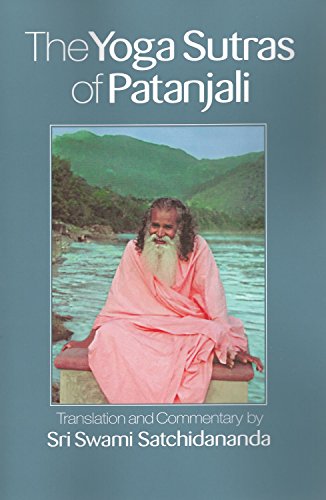
READ FOR FREE – The Yoga Sutras of Patanjali

“The mind is everything. What you think
When you realize nothing is lacking, the whole world belongs to you. Lao Tzu
Lao Tzu, also rendered as Laozi and Lao-Tze, was an ancient Chinese philosopher and writer. He is the reputed author of the Tao Te Ching, the founder of philosophical Taoism, and a deity in religious Taoism and traditional Chinese religions.
WATCH NOW – Basics of Zen Buddhism
READ FOR FREE – The Yoga Sutras of Patanjali


Spiritual Nutrition: Six Foundations for Spiritual Life and the Awakening of Kundalini
This recently added to my library. And I’m glad I did.
When we eat, can we feed the soul as well as the body? Can a diet have an impact on spirituality? Spiritual Nutrition empowers readers to develop personal diets that are appropriate to their lifestyles and spiritual practices. Drawing on 14 years of clinical experience and research, Dr. Gabriel Cousens discusses nutritional issues that can help answer these questions, including raw vs. cooked food; high vs. low protein; the concepts of assimilation and fasting; alkaline–acid balance; attitudes about food; nutrients, energy, and structure building.
In addition, Cousens shares his new dietary system of “spiritual nutrition” that is based on the relationship that the color of the food has to corresponding colors of the human chakra system, hence, the “rainbow diet.” For true nourishment, he strongly promotes the connection of diet to meditation, fellowship, wisdom, and love.
Gabriel Cousens is the author of seven internationally acclaimed books including Spiritual Nutrition and Creating Peace by Being Peace. Known worldwide as a spiritual teacher and the leading expert in live, plant-source nutrition, Dr. Cousens functions as a holistic physician, psychiatrist, family therapist, and cutting edge researcher on healing diabetes naturally.
He holds an M.D. from Columbia Medical School, a doctorate in homeopathy, and diplomas in Ayurveda, clinical acupuncture, and holistic medicine. His multi-cultural background as an ordained rabbi, an acknowledged yogi, and a four-year Native American sundancer, adds insight to his “whole-person enlightenment” teachings.
Dr. Cousens is the founder and director of the Tree of Life Foundation and the Tree of Life Rejuvenation Center, an innovative holistic retreat center for the renewal of body, mind, and spirit, based in Patagonia, Arizona. In his book, There Is A Cure For Diabetes, Dr. Cousens presents his rejuvenation center’s program for reversing diabetes naturally.
Spiritual Nutrition: Six Foundations for Spiritual Life and the Awakening of Kundalini


Reiki is the Japanese word for Universal Life Force Energy. When the ‘Rei’ and ‘Ki’ are broken down into their two component parts, the Kanji (Japanese alphabet) definition for Rei is universal, transcendental spirit, mysterious power, essence. Ki is described as the vital life force energy, very similar to the Chi of Chinese acupuncture, Light to Christians, and Bioplasmic Energy to Russian researchers.
We all have Reiki energy (Universal Life Force Energy), for it is our birth right. What makes Reiki different from other healing methods, is the attunement (Also known as the initiation) process which the student experiences in the various levels of Reiki classes. Anyone can lay their hands on another person and help accelerate the healing process by transferring magnetic energy. A person who has been through the process of Reiki attunements however has experienced a very ancient technology for fine tuning the physical and etheric bodies to a higher vibratory level. In addition, certain of the energy centres, also known as chakras, are opened to enable the person to channel (And vibrate) higher amounts of Universal Life Force Energy.Reiki is never sent, it is drawn through the channel. For example, If I lay my hands on you to do a treatment, you will draw appropriate amounts of energy to which ever areas of your body need it. I am never drained in the process, as I too am treated as I “Give” a treatment. The energy enters at my crown chakra and passes through the upper energy centres to my heart and solar plexus. The rest then passes through my arms and hands to your body. I am thus never drained in the process, as a certain
via Reiki- Healing Science — Reiki energy

Not only does yoga strengthen your muscles but it also increases your flexibility. Another perk: Stretching and breathing deeply during yoga helps to reduce stress hormones that contribute to belly fat,
since yoga reduces stress levels, it also has the potential to improve your overall eating habits (less stress eating!), encouraging weight loss.
Indeed, a November 2016 Journal of Clinical & Diagnostic Research study shows that men lost fat when they committed to a 14-week yoga program. The people in the study practiced yoga five days a week for 90 minutes — but don’t worry, every little bit counts.
via Yoga — My Fitness Lifestyle
 Inspired Life