Deep Dive into Tree Pose

The name comes from the Sanskrit words vṛkṣa (वृक्ष) meaning “tree”, and āsana (आसन) meaning “posture”.

History of Tree Pose

A 7th-century stone carving in Mahabalipuram appears to contain a figure standing on one leg, perhaps indicating that a pose similar to vrikshasana was in use at that time. It is said that sadhus disciplined themselves by choosing to meditate in the pose.

The pose is described in the 17th century Gheraṇḍa Saṃhitā.

Description of Tree Pose

From Tadasana, weight is shifted to one leg, for example, starting with the left leg. The entire sole of the foot remains in contact with the floor. The right knee is bent and the right foot placed on the left inner thigh, or in half lotus position. In either foot placement, the hips should be open, with the bent knee pointing towards the side. With the toes of the right foot pointing directly down, the left foot, center of the pelvis, shoulders and head are all vertically aligned. Hands are typically held above the head either pointed directly upwards and unclasped, or clasped together in anjali mudra. The asana is typically held for 20 to 60 seconds, returning to tadasana while exhaling, then repeating standing on the opposite leg.

Benefits of Tree Pose (Vrikshasana)

  • Improves balance and stability in the legs.
  • Strengthens the ligaments and tendon of the feet.
  • Strengthens and tones the entire standing leg, up to the buttocks.
  • Assists the body in establishing pelvic stability.
  • Strengthen the bones of the hips and legs due to the weight-bearing nature of the pose.

B00XQNBGK6

Attitudes of Gratitude Journal  – READ FOR FREE
146547935X

Science of Yoga

1585426504

Energy Medicine 

B07414752B

Vitamin B Complex – Vegetarian

B00JGCBGZQ

Vitamin D – Non GMO and Gluten Free

Eat Pray Love….by Elizabeth Gilbert
1623158281

Chakra Healing 

B07T2K6V8K

Boho Yoga Pants

Today’s Daily Buddha

The Buddha (also known as Siddhartha Gotama or Siddhārtha Gautama) was a philosopher, mendicant, meditator, spiritual teacher, and religious leader who lived in Ancient India (c. 5th to 4th century BCE). He is revered as the founder of the world religion of Buddhism, and worshiped by most Buddhist schools as the Enlightened One who has transcended Karma and escaped the cycle of birth and rebirth. He taught for around 45 years and built a large following, both monastic and lay. (wiki)

To learn more:

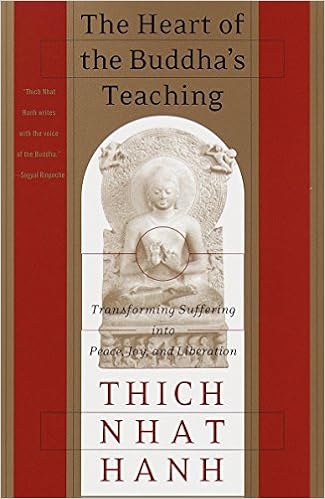
The Heart of the Buddha’s Teaching: Transforming Suffering into Peace, Joy, and Liberation 

The Chakra Sounds

The important chakras are stated in Hindu and Buddhist texts to be arranged in a column along the spinal cord, from its base to the top of the head, connected by vertical channels. The tantric traditions sought to master them, awaken and energize them through various breathing exercises or with assistance of a teacher. These chakras were also symbolically mapped to specific human physiological capacity, seed syllables (bija), sounds, subtle elements (tanmatra), in some cases deities, colors and other motifs.

CHAKRA SOUNDS

There are numerous sound that seem to resonate the chakras. Among the most popular are the use of vowels and the use of mantras. This use of vowels seem to be highly effective in balancing the chakras. The Sacred Vowel are considered sacred in many different traditions and Mystery Schools throughout the planet, including ancient Egyptians, Hebrew, Islamic, Tibetan, Japanese and Native American. There are a number of different systems of Sacred Vowels to balance the chakras. I have utilized a system of sounding the sacred vowels that came to me many years ago and that I have shared effectively with thousands of people. (https://www.healingsounds.com/sound-and-the-chakras/)

1623158281

Chakra Healing

B01LW3T8M2

Chakra Stones

1586380192

READ FOR FREE

Today’s Daily Buddha


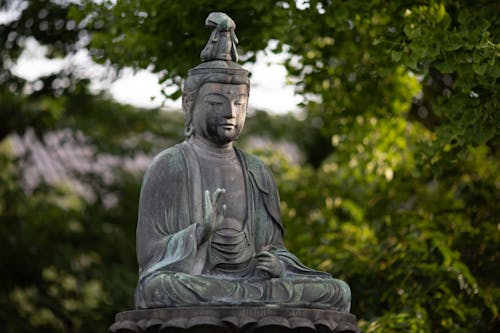
Buddha Statue Near Trees

“Each morning we are born again. What we do today matters is what matters the most” – Buddha

The sources which present a full and complete picture of the life of Siddhārtha Gautama are a variety of different, and sometimes conflicting, traditional biographies. These include the BuddhacaritaLalitavistara SūtraMahāvastu, and the Nidānakathā.  Of these, the Buddhacarita is the earliest full biography, an epic poem written by the poet Aśvaghoṣa in the first century CE. The Lalitavistara Sūtra is the next oldest biography, a Mahāyāna/Sarvāstivāda biography dating to the 3rd century CE. The Mahāvastu from the Mahāsāṃghika Lokottaravāda tradition is another major biography, composed incrementally until perhaps the 4th century CE. The Dharmaguptaka biography of the Buddha is the most exhaustive, and is entitled the Abhiniṣkramaṇa Sūtra, and various Chinese translations of this date between the 3rd and 6th century CE. The Nidānakathā is from the Theravada tradition in Sri Lanka and was composed in the 5th century by Buddhaghosa.

B00EXVDF54

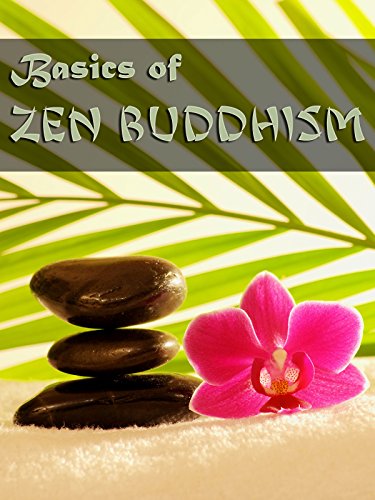
WATCH NOW – Basics of Zen Buddhism 

1938477073

READ FOR FREE  – The Yoga Sutras of Patanjali

Today’s Daily Buddha

Pink Water Lily Flower on Water

Taken from Yoga 365, Daily Wisdom for Life, on and off the mat

FIND YOUR CENTER WHEN THINGS FEEL CHAOTIC

Chaos usually feels like things are scattered, moving in all directions or shifting unpredictably. When things are chaotic and you need to quiet your mind, it is essential to find you center, that place of balance within yourself, so you can become calm. They are many techniques in yoga that can help you do this. You can close your eyes and meditate, blocking out the external visual world to concentrate on your own inner world. You can observe you breathe, offering your attention to something simple and powerful on which to focus. You you chant a mantra or a single word that calms you. When you need to quiet that raging world outside, these techniques offer you access to your calm center.

Yoga 365

B01N6U845K

Yoga Pants

Today’s Daily Buddha

Buddha Hand Statue

This is a saying from the Pali canon, upadhi dukkhassa mūlanti, which means “Attachment is the root of suffering.” So this is a genuine canonical quote.

You’ll find it in this sutta, but translated by Thanissaro as “Acquisition is the root of stress.” His translations are rather idiosyncratic.

In this translation of the same sutta it’s “acquisition is the root of suffering.”

Bhikkhu Bodhi’s translation (not available online, but in The Middle Length Discourses of the Buddha, page 868) has “attachment is the root of suffering,” although he sometimes has “acquisition” in place of “attachment,” in various repetitions of the phrase.

B00EXVDF54

Basics of Zen Buddhism 

1938477073

The Yoga Sutras of Patanjali

Today’s Daily Buddha

Buddha Hand Statue

The root of all suffering is attachment.

This is a saying from the Pali canon, upadhi dukkhassa mūlanti, which means “Attachment is the root of suffering.” So this is a genuine canonical quote.

You’ll find it in this sutta, but translated by Thanissaro as “Acquisition is the root of stress.” His translations are rather idiosyncratic.

In this translation of the same sutta it’s “acquisition is the root of suffering.”

Bhikkhu Bodhi’s translation (not available online, but in The Middle Length Discourses of the Buddha, page 868) has “attachment is the root of suffering,” although he sometimes has “acquisition” in place of “attachment,” in various repetitions of the phrase.

B00EXVDF54

WATCH NOW – Basics of Zen Buddhism 

Reiki Science

This image has an empty alt attribute; its file name is images-231881835060139143878..jpg

Reiki is the Japanese word for Universal Life Force Energy. When the ‘Rei’ and ‘Ki’ are broken down into their two component parts, the Kanji (Japanese alphabet) definition for Rei is universal, transcendental spirit, mysterious power, essence. Ki is described as the vital life force energy, very similar to the Chi of Chinese acupuncture, Light to Christians, and Bioplasmic Energy to Russian researchers.
We all have Reiki energy (Universal Life Force Energy), for it is our birth right. What makes Reiki different from other healing methods, is the attunement (Also known as the initiation) process which the student experiences in the various levels of Reiki classes. Anyone can lay their hands on another person and help accelerate the healing process by transferring magnetic energy. A person who has been through the process of Reiki attunements however has experienced a very ancient technology for fine tuning the physical and etheric bodies to a higher vibratory level. In addition, certain of the energy centres, also known as chakras, are opened to enable the person to channel (And vibrate) higher amounts of Universal Life Force Energy.

Reiki is never sent, it is drawn through the channel. For example, If I lay my hands on you to do a treatment, you will draw appropriate amounts of energy to which ever areas of your body need it. I am never drained in the process, as I too am treated as I “Give” a treatment. The energy enters at my crown chakra and passes through the upper energy centres to my heart and solar plexus. The rest then passes through my arms and hands to your body. I am thus never drained in the process, as a certain

via Reiki- Healing Science — Reiki energy

1585426504

Energy Medicine 

146547935X

Science of Yoga